 ... or does it? After countless Blogger word verifications that were meaningless strings of letters, I come across an actual English word.
This reminds me of that theorem in which an infinite number of monkeys stationed at an infinite number of typewriters (with infinite paper, ribbons, and owl tech support, one assumes) can produce or re-create a great work of literature.
Is "gossip" one of the first words of this future masterpiece? And if so, what kind of fiction is it? Imagine the possibilities!
Does "gossip" describe a new meddlesome aunt for a Jane Austen-like novel? An online muckraker for the spiritual heir of William Gibson? A depiction of Mrs. Lovejoy for a lost episode of The Simpsons?
Post your own theories here.
I've collected thoughts on Harry Potter and the Deathly Hallows, which I finished sometime earrrrly Wednesday morning. Bottom line: while I did not love it -- as the last installment describing a mostly self-contained universe, it was the only book that had to measure up to our expectations, and it fell short of mine -- I keep going back to it and re-reading chapters. So that's something.
 As always here at Brevity, I'll leave the spoilers, starting with my reaction, in the comments section. Also see the small discussion over at Quinn the Brain, and a large forum at Phantom Scribbler. But don't forget to speak your peace here; like Professor Snape at the Yule Ball, I get lonely...
In the grand tradition of mashed-up nicknames for celebrity couples -- think Bennifer, Vaughniston, Brangelina, Tomkat, and Abhishwarya -- Stephen Colbert coined a great one to describe the dynamic duo of actors William H. Macy and Felicity Huffman: Filliam H. Muffman. That name will always be funny.
 So how does one create such a dynamic duo? I'm told dating is involved. Unfamiliar with that topic, I consulted A Practical Handbook for the Boyfriend, a manual for men written by two women: Felicity Huffman and Patricia Wolff. After all, who better to explain it than the better half of Filliam H. Muffman?
While occasionally too surefooted or irreverent, I think the authors have the right approach.
In order to make relationships practical to women, target the men, who have no idea what they're doing anyway. Makes sense.
With more pulpy illustrations inside and chapters on everything from Internet dating to TV rituals to sex to breaking up, the authors cover the entire life of the relationship. Plus, it's sassy and informative; in a few short hours, I've become an expert on relationships, and am finally ready to get my own talk show.
 The NFL draft is this weekend, and with it comes all that talk about freakish physical specimens with tremendous upside (and that's just Mel Kiper's hair!). I was reminded that I never got around to reviewing The Blind Side: Evolution of a Game, by Michael Lewis. It's probably one of the best sports books I've ever read.
Like his previous book Moneyball, Lewis does something rare: he gets me to care simultaneously about the game and the business behind the game. Here he profiles Michael Oher, a jaw-dropping wall of a young black man with surprising speed for someone his size. But he has slipped through the scholastic system as well as other societal cracks, and catches up with the help of several white people in the Memphis community, not all of whom act selflessly.
Lewis also tells the story of the left tackle, a long-undervalued position in the offensive line. (Because most quarterbacks are right-handed, the left tackle usually protects the QB's blind side so he won't be sacked by the defense.) He opens the book with an ending -- specifically, the painful end of QB Joe Theismann's career under the weight of defensive specialist Lawrence Taylor. Theismann's starting left tackle was on the sidelines that night.
Guarding against a revolutionary player like Taylor was one of the reasons the left tackle became a marquee position; the other was the immediate success of Bill Walsh's West Coast offense. Lewis explains how the NFL began to target the rare athlete that combined size, strength, agility, and speed for the left tackle position, and paid those players handsomely. (Generally, the left tackle is the second-highest paid player on a team, after the QB.)
This history lesson parallels the increased regard for Oher, as his uniqueness becomes readily apparent to scouts and coaches in the well-oiled machine of college football in the South. His recruitment by SEC teams feels peppered with some lapses in integrity, if not outright corruption. He eventually chooses a team -- this one -- though I find it curious that his listing on ESPN's roster (#74) is still without a link to his stats.
 This is National Library Week, and a fine excuse to remind you that I do, in fact, still read books. Even the ones that have more words than pictures.
The occasional collection of pictures does help, though. Take, for example, Red Carpets and Other Banana Skins, a memoir by actor Rupert Everett. I have a soft spot for the kind of autobiography that is demanded by almost no one but could still be appreciated by almost anyone.
As you might expect, Mr. Everett comes off as charmingly flawed, but in more than just the British sense. For a brief period (after My Best Friend's Wedding) he was a Hollywood outsider turned insider, and that perspective fueled an intriguing candor that was not just self-deprecating, but deprecating all around. Those who regretted seeing The Next Best Thing (I missed it) may be relieved to learn of its disastrous back story.
Don't read it cover to cover; you'll get mired in early childhood and boarding school blahs and whatnot. Skip around and enjoy the relentless namedropping. Or the rise and fall of the Miami celebrity scene. Or his straight phase. The guy's been everywhere.
 I'd be remiss if I didn't finally get around to mentioning a pair of books that I read last fall. The first is My Life as a Furry Red Monster, in which puppeteer Kevin Clash explains how he developed and became Elmo, and the great effect it's had. The second, Brainiac, recounts the exploits of game show legend Ken Jennings, who also provides an experiential treatise on trivia.
Clash's book gets a little too inspiration-minded at times, but he is Elmo, after all, which means a lot to kids and many adults. Plus, his success story is highly unlikely and unusual; few people dream of being a puppeteer, and even fewer try to make it happen.
 Jennings (who blogs here) seems relaxed for a guy who spent 75 days robbing the coffers of Jeopardy! He's unashamed of his thirst for knowledge and his competitive drive, but I really enjoyed that he can bond with others in their trivial pursuits.
Do yourselves a favor and visit your local public library. If yours is like the Las Vegas system, they're forgiving all late fines.
A double obituary for Kurt Vonnegut, Jr. and Roscoe Lee Browne.
 While hundreds of actors die every year, I must admit that I'm truly sad to see only a few of them go. And that's because only a few make an impression on me. I make a habit of commemorating them with a short post -- click on the tag for "character actors" to see the others -- and I feel that Roscoe Lee Browne fits the bill.
His filmography is staggering, as he's appeared in almost every famous TV show made over a few decades. I "discovered" him as Dr. Barnabus Foster on The Cosby Show, a series that frequently made use of Broadway talent. (Browne won an Emmy for his guest appearance.) His rich voice was unforgettable, and my ears made the connection for the role that ironically gave him the most exposure: the unseen narrator in Babe. There are other actors with great voices -- James Earl Jones and Patrick Stewart come to mind -- but I can't think of one that could approach his warmth and whimsy. Roscoe Lee Browne was 81.NARRATOR: And though every single human in the stands or in the commentary boxes was at a complete loss for words, the man who in his life had uttered fewer words than any of them knew exactly what to say.
FARMER HOGGETT: That'll do, pig. That'll do. Kurt Vonnegut happens to be one of the few famous people I have ever met, and strangely, I've met him twice. While I've not been a faithful reader since high school, it's still a mild shock to hear of his passing because his writings and career were shaped by the notion of survival. No one's indestructible, but Vonnegut came close.
He never advised a college graduating class to wear sunscreen, but did appear as himself in Back to School: JASON MELON: You got a major paper coming up on Kurt Vonnegut. You haven't even read any of the books.
THORNTON MELON: I tried. I don't understand a word of it.
JASON MELON: So, how you gonna write the paper, then?
KURT VONNEGUT: Hi, I'm Kurt Vonnegut. I'm looking for Thornton Melon.Kurt Vonnegut was 84. According to Wikipedia, he has an asteroid named in his honor, and his literary alter ego, Kilgore Trout, also died at the age of 84.
 In 1996, MTV started an all-video spinoff, then called M2. It wasn't part of my cable lineup in St. Louis then, but I made an effort to watch it elsewhere if I had access. One reason was the music video genre, which was still relevant then. But the main reason was Jancee Dunn.
Oh, Jancee. An energetic and witty music journalist, she was given free reign to introduce videos and basically be herself. This was back when the MTV networks still liked their VJs to know about music. Now the on-air personalities are high-pitched skinny models, and those are just the guys.
So I was pleasantly surprised when Mostly Modern Media reported that Jancee Dunn had written a book and kept a blog, and I'm embarrassed to admit that I'd forgotten about her. (I stopped watching videos, and probably replaced her in my affections with Tina Fey. Sorry, Jancee.)
While I am not a Jersey girl myself, last I checked, her nostalgic remembrances hit home for me. She alternates between her personal history and her experiences as a celebrity interviewer. Surprisingly, both are equally interesting. Don't believe me? Read the first 8 pages and tell me you aren't hooked.
And it's not just about the nostalgia; Jancee's a compelling writer, and I look forward to her future efforts. After the past month, when I didn't feel like reading, blogging, or watching sneak previews, her book came along at exactly the right time.
Story 69 September tells no tales. Well, besides these.In the old chemistry lab after hours, two seniors opted
for extra credit. If a Geiger counter measured pheromonal
activity, they’d start experimenting just to stop the damn
clicking.He focused on her lips, she believed. She glossed her
apparatus and tested her hypothesis by pressing them
against a flask, breathing out. Before long they engaged
in the scientific method.Man, sex between science majors can be really hot.
My Harry Potter week coincided with Lumos 2006, an academic symposium held in Las Vegas this weekend for fans of the book series. I didn't attend -- knew nothing about it until it was sold out, and lacked the time anyway -- but I did notice that Dr. Tom Morris lectured on "The Amazing Practical Wisdom of Harry Potter."
 I'd feel jealous if I hadn't already read his book, If Harry Potter Ran General Electric. It's not so much speculation of how a teenage wizard would chair a Muggle corporation as it is a thesis on how J.K. Rowling's books provide good examples of leadership and innovation.
Not surprisingly, Morris spends much of the book pointing out the strong leadership qualities of Albus Dumbledore, who leads by example and inspires the kind of loyalty that CEOs dream of.
Harry, in turn, develops his own leadership skills by emulating the headmaster, adopting a sense of ethics and earning the respect of his fellow students despite his own adolescent flaws.
The book is both business management theory and literary scholarship, and it performs both roles well. Sadly, though, it never answers the question: how many Muggles does it take to screw in a light bulb?
I should mention that Morris previously wrote If Aristotle Ran General Motors. So he has the makings of a pretty good book series. Now what? I suggest future titles:
If Wolverine Ran Gillette
If Calista Flockhart Ran Hormel
If Plato Ran Play-Doh
If Captain Jack Sparrow Ran Napster
If Abraham Lincoln Ran Enron
If Magic Johnson Ran Magic Johnson Theatres
If Dracula Ran the American Red Cross
If Legolas Ran Sephora
If Lady Godiva Ran Godiva
If Jean-Luc Picard Ran General Foods International Coffees** I know it's obscure, but can anyone explain the connection in this last title? The first reader to do so will receive 100,000 Brevity points.
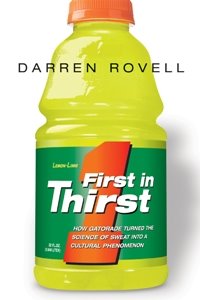 For everything you wanted to know about Gatorade but were afraid to ask, pick up First in Thirst. Its author, Darren Rovell, covers the business of sports for ESPN, which sounds like a terrific job until you realize that he has to live in Bristol, Connecticut, or what Keith Olbermann once called "the most godforsaken place on the Eastern Seaboard."
Rovell writes the story of Gatorade, from its humble origins in a University of Florida lab to the dominant player in the sports drink market. (Legal note: Gatorade owns an 80+ percent market share, but probably gets left alone by the Department of Justice because it created that market, and earned its market position without violating any antitrust laws.)
Using the lesser recruits of the freshman football team as guinea pigs, four scientists determined that a salty solution was better than water at replenishing the 5-10 pounds of sweat that a player may lose in game conditions under the Gainesville heat. Better yet, the players could avoid the kind of muscle cramping that excessive amounts of water caused, and could play with more endurance in the second half. Gatorade soon graduated to varsity, and the effects were immediate.
The spread of Gatorade's early popularity was inexpensive and clever. In a tactic that Malcolm Gladwell might appreciate, Gatorade was given to the trainers on college teams, who peddled their influence to the coaches and players. Orange coolers and green cups were provided, and the trainers knew just what to do with them to create the maximum amount of TV exposure. In essence, Gatorade invented product placement in the sports world.
Gatorade benefited from a lot of happy accidents. The practice of dumping Gatorade on winning coaches began earnestly with the New York Giants in their championship season. When Gatorade took a chance on a single athlete to endorse their product, they went with Michael Jordan. The "Be Like Mike" song was quickly written by a pitchman who'd seen The Jungle Book with his kid and wanted to do something similar to the song "I Wanna Be Like You."
Rovell doesn't have a lot of bad things to say about Gatorade. Their good ideas were extremely successful; their bad ideas (Gatorade Light?) were quickly dropped. I had expected corporate infighting, or nasty business practices when Coke's Powerade or Pepsi's All Sport tried to move in. But it was basically clean competition. I suppose there's nothing wrong with depicting a positive business model. Not every business success story has to have a body count.
Finally, in what I think is a much better idea than adding material to a paperback edition, Rovell ran a Gatorade-themed blog here. (In it, you'll see Gatorade's good luck streak continues: they signed Dwyane Wade months before Miami won the NBA title, and his asking price went up.) He stopped updating it recently, but it still makes an excellent afterword.
 If you read and share as much as I do, then you're entitled to start judging a book by its cover. Take King Dork. After seeing tiny thumbnails of what resembled a messy purplish cover, I looked closer and realized the truth: it's a tattered reworking of a famous maroon and yellow novel.
King Dork is shelved in the Young Adult section of the library, but it's really a must-read for people way past their adolescence. The novel follows sensible, postrebel high schooler Tom Henderson; I consider him sensible because he knows high school is worthless. The people who grew up loving The Catcher in the Rye are old enough to teach it now, and Tom knows enough to be able to talk to the Catcher cult but emerge unscathed.
Tom and his close friend Sam Hellerman are in a band. Well, sort of. Before they get instruments, it's a band in spirit. They go through a parade of hysterical band names, album titles, and rock star personas on nearly a weekly basis. (There's a convenient list of the band's name evolution at the end of the book.)
Over the course of a fall semester, Tom navigates through the perils of high school society, trying to be left alone. At home he has a somewhat self-absorbed sister, an overmedicated mother, and a woefully out-of-touch hippie stepfather (my favorite character). Upon finding a set of his late father's high school books, he reads them for clues, and to perhaps forge a posthumous connection.
What else is there to know? Well, a lot, and you can prepare accordingly. The author, Frank Portman, has photos of people reading his book in his blog. He's part of a band himself, the Mr. T Experience. Feel free to scan the lists of books Tom reads and albums he listens to. And then watch the trailer.
But it's still not enough. Read the book. Relive the annoyances of academia and the uselessness of physical education (boxing?). Teachers who can't pronounce words. Chicks who dig bands, even hypothetical ones. And discover, as Tom does, that Sam Hellerman is a genius. Rock and roll.
I'll be in the Bay Area next week, but it's not a vacation. Anyway, some of my evenings will be free and I thought I'd take a few books to read. Always prepared, I reserved a few titles from the library last week, so I have the following:
First in Thirst by Darren Rovell
The Boy Who Fell Out of the Sky by Ken Dornstein
Flavor of the Month by Joel Best
Which Brings Me to You by Steve Almond and Julianna Baggott
Icebergs by Rebecca Johns (who blogs here)
For now I'm ignoring the lack of racial diversity and reading the first few chapters of each to gauge my immediate interest. I know I'll read the last one eventually -- it's not often that an author of a published book visits Brevity and leaves a comment -- but I have to believe that, even with my unusually proactive reading tendencies, I won't finish them all.
And, like a skittish radio listener who's found a good song on one station, I can't help but think that there's some great option I'm not exploring. So what are you reading, or eager to read? What do you think I'll like? Feel free to leave suggestions.
55 Fiction Friday counted 927,548 little pieces. Such betrayal!Josie was hired by the government to address low voter turnout. She tried countering every common excuse: inclement weather, work schedules, distrust, lack of information, indifference. Miraculously, her new measures withstood judicial scrutiny.
Now, after the singing debates, Americans could call in their votes at any point during Election Week. Standard text messaging rates apply.
 Once upon a time, politicians spoke their minds without the interference of consultants, and books about them were written anonymously. Then everything changed, as spontaneity was taken out of political messages, and the mystery was taken out of who wrote Primary Colors. Speaking of Joe Klein, I read his latest, Politics Lost. It's about the fine-tuning of Presidential campaigns since the mid-1970s, and how the right mix between candidate and message is so hard to achieve.
Invoking two sacred orators -- Harry Truman and Robert Kennedy -- Klein speaks fondly of a time when politicians were unafraid to show their flawed side in their speeches, and their audiences responded positively. While this local color still exists, it is often washed out by political handlers and focus groups.
Klein argues that Presidential elections are won by the side with the better campaign. This implies that there are no juggernauts in politics, and that, at some point in any election, the nation could really vote either way. (I refuse to believe that Walter Mondale and Michael Dukakis had a chance.)
Eventually the author gets to the juicy stuff: what went wrong for the Democrats in 2000 and 2004. Basically, they did everything wrong. Al Gore tried to have it both ways: he disassociated himself from the Clinton presidency for character reasons, but still wanted to bask in its goodwill. His best campaign issues were unveiled too early in the campaign, and were often too erudite, even for the press. John Kerry tried to argue both ways. He was overhandled by a large number of people who didn't know him. His calculated choice not to respond to the lying Swift Boat veterans cost him dearly, and by the end he played right into the role of flip-flopper. That each Democrat still came within votes (or uncounted votes, depending on who you ask) of winning tells you how hard the Bush campaigns had to work to win.
The final chapter has little or nothing to do with the rest of the book: Klein lays out the follies of the Bush administration, and can't help but sound bitter. While it was nice to see a catalog of every morally reprehensible thing that was probably done, it came out of nowhere, and made the rest of the book less profound.
Maybe there are times when it's better to use anonymity.
 Say what you will about CNN's Anderson Cooper: son of Gloria Vanderbilt, prematurely gray, closet fan of MTV's My Super Sweet 16, curiously single, sharply dressed. But the man knows when to abandon the starchy newsman image and roll up his sleeves for America. This is precisely what he does in Dispatches from the Edge: it's part correspondent's diary, part family memoir.
The overriding impression of the book is that, despite his best efforts, Anderson Cooper cannot remain a talking head like much of the news media. He cares, or at least has a conscience. There's a recurring theme in his book of his meager but significant attempts to chronicle the existence of the dead -- whether in Sri Lanka, Niger, Iraq, or the American Gulf Coast -- so that they're not entirely forgotten.
Whether in the role of correspondent or author, he likes getting his hands dirty. In these regions torn by natural disaster, famine, or war, his travelogues are not particularly pretty. The otherwise unspoken subject of newsman protection comes up a lot -- before his CNN days, he had to pay bodyguards out of pocket to maneuver him through harm's way. As it so happens, there's a whole market out there for enterprising freelance heavies to assist journalists. Some are more trustworthy than others.
The personal information is mostly formative, and framed around the losses of his father (heart problems) and brother (suicide). Even though the circumstances surrounding the latter might have a certain dark appeal to an outsider -- this is the Vanderbilt family, after all -- the author's resulting confusion and emptiness displays a decided lack of intrigue. Far more confessional is his kinship with Mississippi and Louisiana, where his father grew up, and where the author's own earliest memories are set.
Anderson Cooper has the makings of an interesting writer. War stories aren't my favorite subject -- I hadn't read any since Shutterbabe -- but I appreciate knowing that there's more to the story than "war is hell."
At the risk of losing some geek credentials, I must admit that my interest in science fiction is limited to movies and TV, and rarely transfers to books. My affinity for short stories partly originated from a collection of Twilight Zone tales, but that's about it.
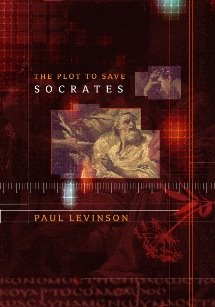 Still, I took note of a magazine blurb reviewing The Plot to Save Socrates by Paul Levinson because it addressed a subject I'd toyed with before: time travel in the hands of respectful historians. I had a similar story idea -- mine had graduate students using some ill-described device to collect lost primary sources, until it all went to hell -- but I could never get it to work.
I'm not entirely sure this book gets it right either, but it was fun to read, and just academic enough to minimize my guilt. Set in 2042, it describes a graduate student who receives a seemingly genuine ancient Greek manuscript from her mentor, who subsequently disappears. The manuscript is a dialogue between Socrates and an unknown traveler who seems to know about time travel and cloning. (He says he is from somewhere near Ithaca and Syracuse. Socrates remarks those cities aren't close in his time.) So she travels back and forth through time to accomplish a job that several of Socrates' own followers failed to do.
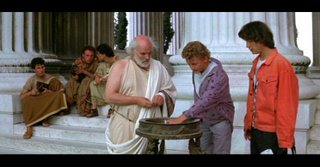 A good time travel story should have a user-friendly device, like the DeLorean from the Back to the Future trilogy. The Terminator movies kept its technology vague; all you know is that the future beings enter the present day naked. Timeline used a complicated process that transfers the traveler's genetic material like a fax machine; again, vague. While I like the phone booth from Bill and Ted's Excellent Adventure -- hidden in plain sight during the present day, but accessible to those who know how to use it -- it, like the DeLorean, does not blend into the past.
Give Levinson credit for a truly inspired mechanism: it basically amounts to a set of deluxe chairs, but they're kept in a pair of exclusive gentleman's clubs in New York and London that have been around forever. They're designed to travel through time, but not space, so while the New York chairs can go back a few centuries, those who go to London can go back much further, and end up in Londinium. The creation of these chairs is never fully explained, but they appear to spring from a combination of ancient know-how and futuristic materials.
I also appreciate all the dry research that went into a grand-scale escapist adventure, populated with a nice mix of famous and marginally famous figures. There's some genuine mystery (who wrote the manuscript, and what happened to the mentor?) and some decent twists in resolution. Eventually, we meet Socrates, and learn from him what we already knew: he loves San Dimas.
 I've long since transferred my affection to The Colbert Report, but there's one thing The Daily Show still gets right: interesting authors as guests.
A few months ago John Hodgman appeared to promote his almanac-like book The Areas of My Expertise. (His interview with Jon Stewart can be accessed here.) He was such a hit that he's now a recurring Resident Expert.
I've read the book, and the wit is exceedingly dry. Very hit or miss at times, but the parts I found funny were of the laugh out loud variety. I appreciated that.
Jon Stewart (and many reviewers) have focused on the unique list of Seven Hundred Hobo Names, the centerpiece of a chapter on Hobo Matters. I'll admit it's an impressive undertaking, but I enjoyed these other sections a lot more:
When Writing, Please Avoid These Failed Palindromes
Two Libraries That Are Smaller Than This Book
History's Worst Men's Haircuts
Short Words for Use on Submarines to Preserve Oxygen
Nine Presidents Who Had Hooks for Hands
For geography buffs, there's a breakdown of all 51 U.S. states (don't ask) toward the end that was consistently clever.
On Colorado...
Organized as a territory in 1861 by hardscrabble settlers who had come west in search of good skiing and a place to hide their missile defense nerve center.
On Missouri...
Most experts agree that everything is up-to-date in Kansas City, Mo. With its seven-story skyscrapers, full telephone service, burlesque theaters, and multiple gas buggies, it has gone about as far as it can go. No further progress will be undertaken.
And Nevada...
Current Nickname: The Funtime Family State for Families!
Old Nickname: The Prostitute State
Motto: "The U.S. Government Neither Confirms Nor Denies the Existence of a Nevada State Motto."
Somewhere there's a secret club where John Hodgman, Sarah Vowell, and others meet and play board games or something. A basement at Yale, probably. I want to join them when I grow up.
 I haven't reviewed a book in a while, mostly because I hadn't read any (and reviewing magazines sounds kind of lame). But now that the Final Four is set -- congratulations to LSU, George Mason, UCLA, and Florida -- we have a long week to wait out the end of the season. What better way to do it than to discuss a book that waits with you?
John Feinstein is a Duke grad who has written sports themed books of fiction and nonfiction. He's probably most famous for A Good Walk Spoiled (about pro golf) and A Season on the Brink (about Bob Knight when he coached Indiana). I've read the latter, as well as his accounts of the 1978 Duke men's basketball team, the Atlantic Coast Conference, and the Patriot League.
His latest, Last Dance: Behind the Scenes at the Final Four, is ostensibly about the 2005 Final Four in St. Louis, but more specifically regards the changes in culture as the weekend event has grown more popular.
The idea is good, and sources are plentiful, as there are people who have attended all or many Final Fours in some capacity: referees, coaches, players, administrators, journalists, and announcers. Before it became the property of CBS Sports, the Final Four was a convention/retreat of sorts for coaches, who used the weekend to network, learn from each other, and reminisce. (Oftentimes you can find anybody in the lobby of a single hotel.) Now it's a time where the more famous coaches stay away from the public eye, and all the fun happens in private parties.
As for the teams actually participating in the Final Four, they play two things: basketball and the waiting game. Mandatory press interviews and public practices obscure the main event, and the players are forced to waste time in their hotel rooms watching pay-per-view movies, waiting for a nighttime tip-off. That probably explains why the championship games often start so sluggishly.
The execution of the book leaves a little to be desired. For those new to Feinstein, it's probably very brisk and informative. But the more familiar you are with his work, the more repetitive and disjointed this book comes across. He has a lot more anecdotes from his Duke and UNC sources than from anywhere else; the history of those schools take up large chunks of this book (even though Duke wasn't in the 2005 Final Four). Still, I learned about things he'd never written about before, like the officiating and the selection committee. I was also surprised to discover that Billy Packer, who was hired by CBS to start up their fledging college basketball broadcasts, is partly responsible for inventing Selection Sunday and the Road to the Final Four.
The author spends a chapter, and then some, ranting about the selection process for the tournament. He brings up the 2003 field, and I learned for the first time that the committee put the two best teams that year (Arizona and Kentucky) on the same side of the bracket for the same reason that they assigned BYU to a possible Sunday game: they weren't paying attention. Pathetic.
One thing Feinstein never addresses: why the Final Four returns to Indianapolis every few years. I know the NCAA is headquartered there now, and that the state has a rich basketball tradition. But come on now. How about some more interesting cities out West? That way the players don't have to wait as long for tip-off times on game days, and the fans can go exploring and find something besides a famous empty racetrack. Again.
I've reviewed a few books this year, all under the motto/mantra that "I read 'em so you don't have to." But I find myself underqualified to examine a year in review when it comes to books. Generally, I come across a book in one of two ways:
1. I'm at the local public library and pick up a book that tickles my fancy, wherever said fancy may be.
2. I'm anywhere else -- at a bookstore, or maybe reading a publication, or online -- and I come across a book title that may or may not tickle the aforementioned fancy. Then I search for the title in the library's vast database and, if found, reserve a copy. If not, I wait a few weeks and try again.
My reading pattern is library-based for a simple reason: I'm more likely to crack open and finish a book if there's a return date involved. I have many interesting books I've purchased that sit there on my bookshelf, unread, because there's no deadline when it comes to outright ownership.
Now this doesn't mean I vigilantly read everything I check out. Indeed, I probably finished half of them. But I like having the option of knowing I could have read the others, if I were so inclined. This may make me a lazy reader, but I'm still a reader safely within a tight budget.
As with movies, ranking the books I read would prove pointless. What I enjoyed a few months ago might be something I wouldn't be in the mood to read now. (I'd venture to say that I would read The Game, Harry Potter and the Half-Blood Prince, and Assassination Vacation again.) So instead I'll cop out and provide a brief roundup of books I've read but never got around to reviewing:
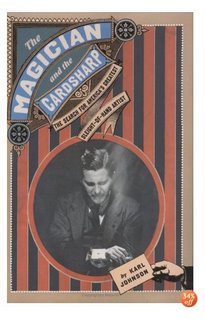 The Magician and the Cardsharp, by Karl Johnson: This is one of those titles I read about in a magazine. It tells the story of a Canadian-born illusionist (not too famous, more of a magician's magician) who takes an almost quixotic journey to the American Midwest, hellbent on confirming an urban legend about a cardsharp who can seamlessly deal from the center of the deck. I got through about half of it, thoroughly charmed by the vintage photos of the era, when I suddenly decided to flip to the cover spine to read the library call number. Lo and behold, this was nonfiction. I'm not sure if this makes me like the book more or less: many of the supporting characters are of tall-tale caliber, and the mix of real people of the era made me only want to believe it was true.
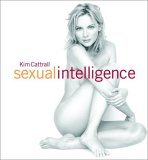 Next was Sexual Intelligence, sort of an amateur treatise by actress and author Kim Cattrall. (As you may guess, this book fell in the first category.) I never read her first book, Satisfaction: The Art of the Female Orgasm, mostly because it was always wrapped in plastic in the bookstores. (My loss, I believe, particularly when it comes to my social life.) This book is sort of a pictorial history of sex as perceived by ancient cultures, merged with modern-day opinions of people from all walks of life. I'm sure she meant well, but the book comes across as a bit of a messy hodgepodge. I keep remembering weird photos of the author posed provocatively near centuries-old phalluses.
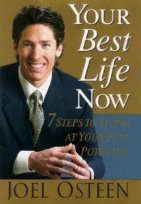 Perhaps on the other end of the moral spectrum is Your Best Life Now by Joel Osteen. It's a highly accessible combination of Christianity and self-help at a time when an unhealthy chunk of Americans could use equal doses of both. (I was prepared to write a review a few months back and call it "Rev. Phil," but I never got around to it.) Joel Osteen is a Houston-based clergyman with a stadium-sized congregation and a nationally syndicated sermon. My parents used to watch it on PAX, the only clear channel we received back in rural North Carolina. (It helped that he told a joke in the first few minutes, and displayed an Indian flag in the background.) He's successful because he's spiritually inclusive in his speeches, which is refreshing to those of us who aren't Christian but also don't dismiss the entire religion as worthless. The book is a natural extension of his beliefs, and while it lacks teeth, it is well-organized and easy to follow. I don't necessarily agree with what I had read, but it does no real harm to society for those readers who choose to follow his instructions to the letter.
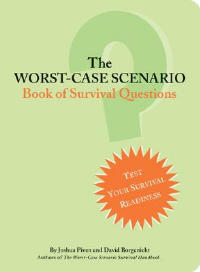 Finally, we have The Worst-Case Scenario Book of Survival Questions, by Joshua Piven (no relation to Jeremy, as far as I can tell) and David Borgenicht. I've enjoyed their past manuals -- they make great gifts if you expect the offbeat -- and this book takes the teachings a step further, placing the reader in precarious situations and making the reader decide what to do. Curiously, there often was no right answer, but just semi-right answers with corresponding pitfalls should the reader choose them. In that respect it reminded me of the bar exam. Still, this is the kind of book that works better as a sit-down read; you couldn't, say, fashion a parlor game with your friends out of it.
Rather than making a traditional solemn anniversary comment -- you can read those pretty much anywhere -- I thought I'd discuss something different.
9/11 drastically altered how the Western world saw itself and others. But what I find interesting is that the sci-fi genre, one which I would normally consider to be timeless, escapist, and therefore unaffected by current events, has also been subtly changed.
Books 5 and 6 of the Harry Potter series -- the ones written after 2001 -- can be read as commentaries on the present-day political climate. In fact, this thread sets out a few striking examples. Dolores Umbridge is like the bad Presidential appointee who won't go away; even when removed from Hogwarts, she keeps her place in the Ministry of Magic. Stan Shunpike, the Knight Bus driver, may as well have been sent to Guantanamo Bay, seeing as how his unfounded arrest was only made to allow the clueless Ministry to keep up appearances. The Weasley family locator, which I once mocked here, has now become a charmed variant of the color-coded terror alert. "Dire peril," indeed. And don't get me started on the Ministry's memo on how wizards should protect themselves and their family; apparently, I wasn't the only one looking for the words "duct tape."
The final installment of Star Wars is no different. While the original trilogy had no Nixonian influences I know of, and if anything inspired some of Reagan's politics, the newer trilogy was very much a product of George Lucas' worldview. Forget the name Nute Gunray for a moment, but notice this tool has slipped through the cracks of accountability like a true bureaucrat to stay in power. The Trade Federation is basically a highly empowered and politically embedded lobby, like Big Tobacco on the intergalactic level. By the second film we become aware of the rift between the Jedi and the Senate, which is basically analogous to the tenuous separation of church and state. And then there's Anakin:
"If you are not with me, then you are my enemy."
Could any leader in the real world be so brazenly simple-minded in delineating good from evil? Oh wait, ours did:
"Either you are with us, or you are with the terrorists."
And speaking of Dubya, isn't he a great character? I'm not alone in thinking that. Long-time reader Kristy warned me that in the recent Hitchhiker's Guide to the Galaxy movie, Sam Rockwell plays galaxy leader Zaphod Beeblebrox as a George Bush-type character. I've seen the film and I agree. In some respects it's a lazy shortcut in character development -- oh, we get it, rich kid gets plum job to society's detriment -- but it's damn effective.
Finally, I should mention this article which cites 9/11 as part of the inspiration for the new wave of sci-fi shows this fall TV season. It's interesting that not just the Law & Order shows can be ripped from the headlines.
The easy answer for why science fiction seems to convey a reaction to 9/11 is that its authors, much like anyone else, are affected by it. That it's a natural result of the adage "write what you know." I'm not satisfied. I think the reason 9/11 and the resulting war on terror have creeped into science fiction is because these recent events are like a fresh take on traditional sci-fi themes: clear victims, unclear villains with alien methodologies, ineffective leadership, sacrificial heroes, and the strange lure of mindless drones to a sinister cause. We're told the folks of al-Qaeda are bad, and that we should trust the forces of good to eventually put them away. The war on terror is a serious, complicated issue, and yet our President never treats it as such. He treats it like science fiction.
I'm just hoping the inevitable twist at the end works in our favor.
 I'm off to Delaware this long weekend to attend the wedding of a cousin of a cousin. Yeah, we're close. It was 3 a.m. once I was done packing my stuff and cleaning the house, and I intended to be awake three hours later to get showered and dressed for my morning flight to Baltimore, so I decided to stay up. While I was well versed in the art of the all-nighter back in college, I seem to have lost my touch.
Anyway, I kept myself awake by finishing The Namesake by Jhumpa Lahiri. It tells the story of an Indian man born and raised in America, and in certain descriptive passages I couldn't help but identify. But what I appreciated more were the differences that made his Indian-American experience feel foreign to me: the Northeast upbringing, the non-vegetarian standard, the literary and artistic background, and the emphasis on higher education of the graduate school variety.
Up until the end I liked where the story was taking me. The author jumps forward in time quite a bit, so I was surprised (and a little disappointed) when she lets the story end in the year 2000. There's no law that requires everyone to address 9/11, but when the main character grows up to become an architect in New York City, you develop a certain expectation. I felt slightly denied.
I got to the airport gate without fanfare and slept the entire flight.
I haven't reviewed a book in quite some time. Maybe I haven't been reading. Or maybe I was waiting for the right book.
The time has come. The book is Make Love the Bruce Campbell Way. Self-proclaimed B-movie actor Bruce Campbell (filmography here) has given us the ultimate Hollywood insider account of an A-list production gone horribly awry.
It's a novel rather than a memoir, because he's already done that.
The lead character, also an actor named Bruce Campbell, mysteriously manages to snag and win an audition for a supporting role in the Mike Nichols romantic comedy Let's Make Love!, starring Richard Gere and Renee Zellweger. The book follows Bruce's hysterical attempts at researching his character, the trusty doorman at Gere's character's hotel. Just as he tries to enhance his studio credibility, he also succeeds in adding a few low-budget touches to the movie. Nichols and Gere in particular seem open to whatever Bruce suggests.
Eventually the project dies, for budgetary reasons, and Bruce is implicated. The book concludes with Bruce attempting to restore his name from a secret adversary hellbent on destroying Bruce's career. Yes, it is as cheesy as it sounds. But it's also quite readable.
Hollywood satire is a dangerously unsuccessful film subject, but this book could potentially be a great movie, with a potential Oscar-caliber supporting role for Richard Gere. Seriously. He could be better than John Malkovich in Being John Malkovich. He'd have to have a daring sense of humor, and given his reputation that's entirely likely.
I've said that I enjoy reading memoirs about people who have no business writing a memoir. Bruce Campbell is one of those people. And I'm looking forward to whatever craziness he has to say next.
 ... or does it? After countless Blogger word verifications that were meaningless strings of letters, I come across an actual English word.


